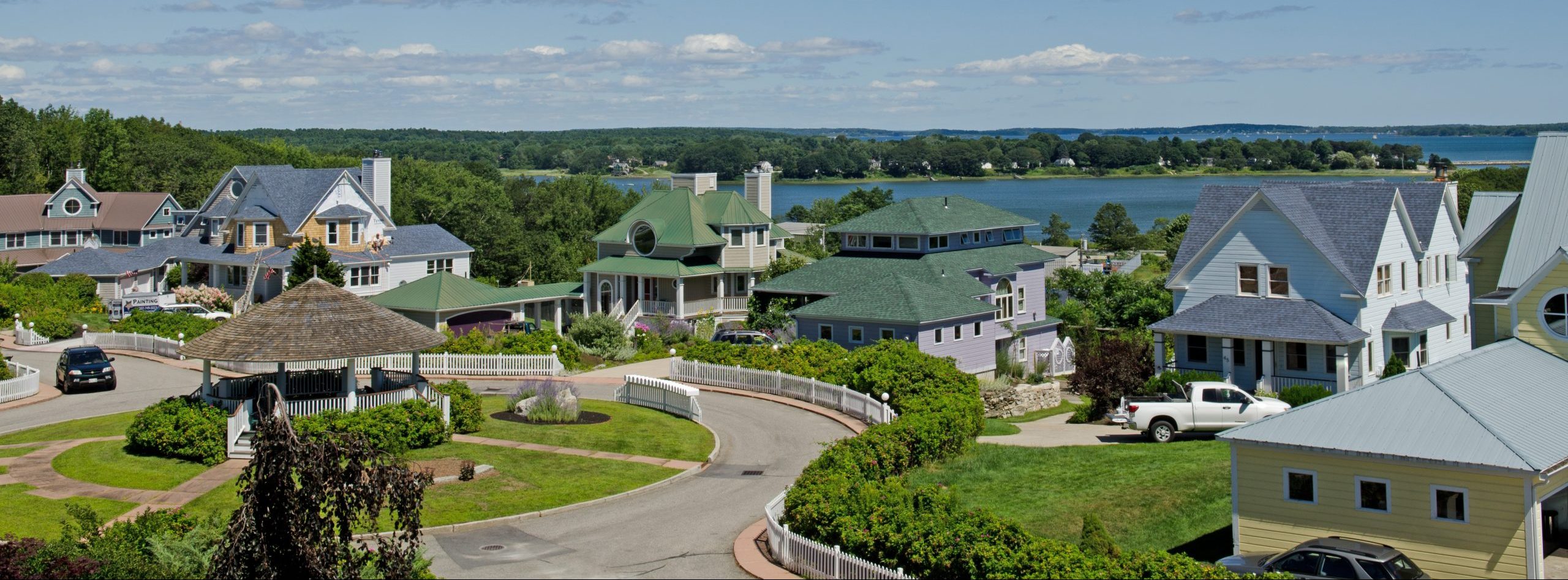
A new analysis of home price data across all 50 states puts Maine at the top of the list. Between the first quarter of 2021 and the first quarter of 2026, Maine home prices rose 58% — the highest five-year appreciation rate in the country, tied with neighboring Vermont. Seven of the top ten states on that list are in the Northeast. Maine leads all of them. For a state with real winters, a state income tax, and none of the obvious tailwinds people usually point to — a booming tech sector, a major metro area, a warm climate — that ranking raises a fair question: what’s actually driving it? The answer turns out to be more interesting than the headline.
Why Are Maine Home Prices Rising So Fast?
The short answer is supply. Maine simply doesn’t have enough homes for the number of people who want to live here.The state’s long-term housing shortage is estimated at roughly 84,000 homes needed by 2030, and that gap didn’t open overnight — the inventory shortage has been building for the better part of a decade because too few homes have been built relative to demand.Mortgage rates have compounded the problem. As rates climbed from pandemic-era lows near 3% to above 7% in 2024, homeowners who locked in those low rates had every financial incentive to stay put rather than sell and finance a new home at a much higher rate.
Economists call this the “lock-in effect,” and for years it kept inventory artificially low — fewer sellers, in a market that already had too few homes.That dynamic is starting to loosen. By late 2025, for the first time in years, more Maine mortgage holders had rates above 6% than below 3%, which means fewer homeowners now have a strong financial reason to stay locked in place. Active inventory has been climbing as a result — but Maine still isn’t close to a balanced market, where supply and demand are roughly even.This shortage isn’t unique to Maine. Nationally, the ratio of home prices to household income has climbed from 3.5 in 1985 to roughly 5.1 today — homes have grown significantly more expensive relative to what people earn, in nearly every state. But the squeeze is sharper in markets where supply is most constrained, and Maine is one of them.
Is Maine a Safe Place to Live?
Yes — by a wide margin. Maine consistently ranks as the safest state in the country, with a violent crime rate of roughly 100 incidents per 100,000 residents, well below the national average of around 360 per 100,000. Maine’s crime rate has also declined for four consecutive years, continuing a long-term downward trend rather than a single good year.
For people weighing a move, or simply wondering whether the place they already call home is a good bet, safety is not a minor variable. It’s one of the most consistently cited factors in long-term relocation decisions — and Maine’s numbers are hard to argue with.
What’s the Maine Job Market Like?
Tight, in the best sense. Maine’s unemployment rate sits at approximately 2.9%, well below the national average. The state currently has roughly 41,000 open positions and only about 17,000 unemployed workers to fill them — a gap that points to a labor market with more demand for workers than people available to fill the jobs.
That kind of imbalance usually means employers are competing for talent, not the other way around. It’s a meaningfully different economic position than many faster-growing states are in.
Are People Moving to Maine Because of the Climate?
This is the most counterintuitive piece of the story — and possibly the most important one.
A growing body of research points to climate stability as an active factor in relocation decisions, not just an afterthought. Among recent migrants to Maine, roughly three out of five cited climate as having some influence on their decision to move here. As extreme heat, wildfire risk, and severe weather become more disruptive in other parts of the country, Maine is increasingly being viewed not as a place people leave, but as a place people are choosing to go.
That’s a meaningful inversion of the old narrative. The long winters that have always been part of the trade-off for living in Maine are, for a growing number of people, starting to look less like a drawback and more like a form of insurance.
What Do the May 2026 Numbers Show?
The statewide data backs all of this up. According to Maine Listings, the statewide median sales price for single-family homes in May 2026 was $425,375, up 2.6% from April. Homes sold in a median of just 13 days, and sellers received 98.3% of their list price on average — both signs of a market that still strongly favors sellers.
Year-to-date, the picture is a bit more measured. The median sales price through May sits at $400,000, up just 0.3% over the same period in 2025, and days on market have lengthened to 27, compared to 20 a year ago. That’s not a market cooling off — it’s a market finding a more sustainable pace after several years of extraordinary appreciation.
Inventory is improving too. Active listings were up nearly 28% year-over-year in May, and new listings rose more than 10%. But at 3.9 months of supply, Maine remains well below the 5-to-6-month threshold that typically defines a balanced market.
The Bigger Picture
None of this happened by accident, and none of it is explained by any single factor. Maine’s position at the top of the national home price growth rankings reflects a combination of constrained supply, a tight labor market, one of the lowest crime rates in the country, and a growing recognition — among people who didn’t grow up here — that Maine offers something increasingly rare: stability.
The winters are still long. The taxes are still real. But for a state that isn’t supposed to be winning this particular ranking, the data tells a pretty clear story about why it is.
If you’re curious what any of this means for your own property or your next move, we’d be glad to talk it through.
Moving to Maine?
About the Author: Michael