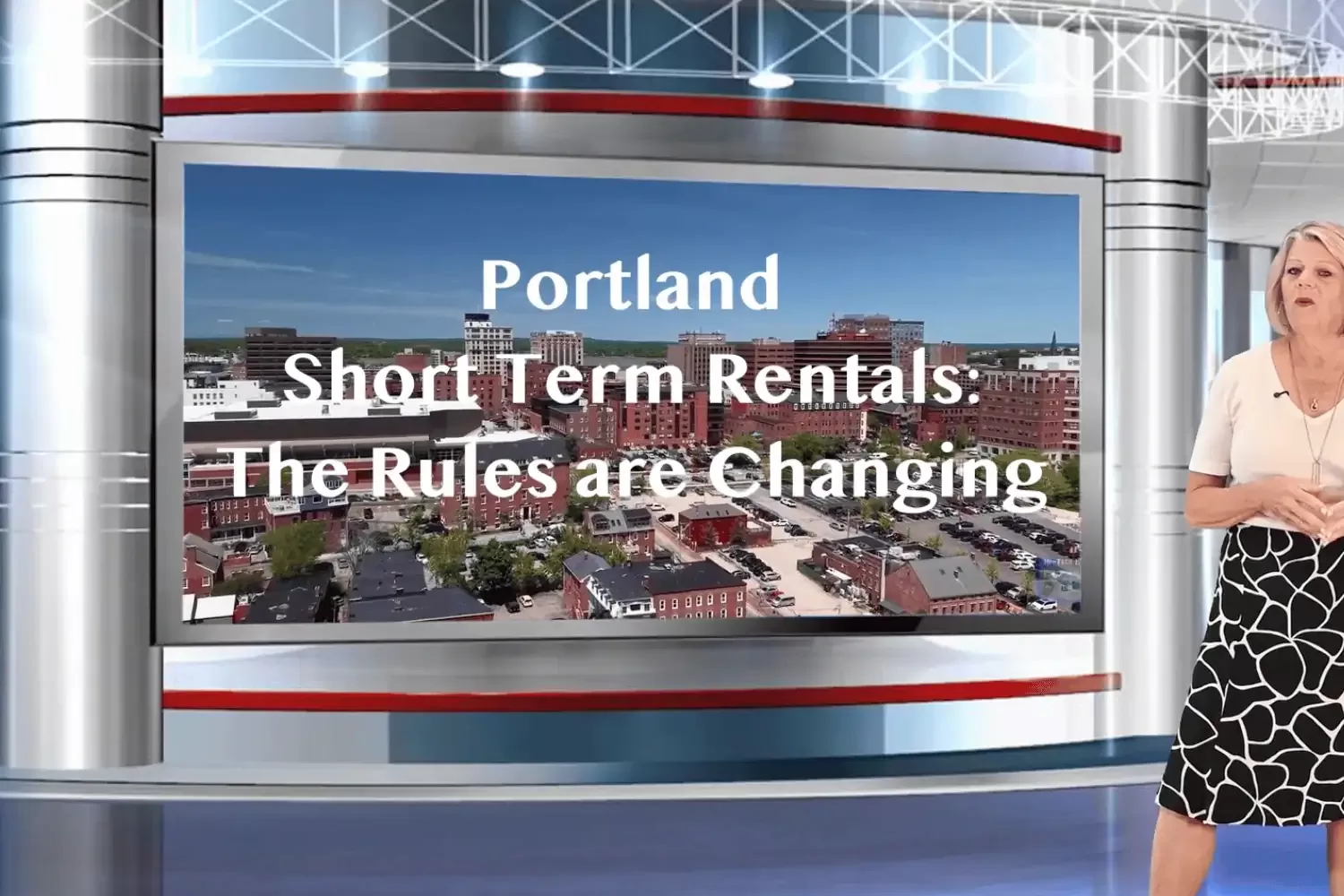
Why are short-term rentals so popular in Portland? Ask ten visitors why they booked a short-term rental instead of a hotel room, and you’ll hear the same handful of answers. A full kitchen instead of a mini-fridge. Enough space for the whole family under one roof. The chance to wake up on Munjoy Hill or in the West End and feel, for a few days, like a local instead of a tourist.
Is the Rental Demand Real?
Yes! That demand is real — and it’s part of why so many Portland homeowners have looked at the short-term market over the years. Some are offsetting a mortgage or rising property taxes. Some are keeping a family home in the family, lived in and cared for, rather than sitting empty. Some are building a straightforward investment around the city’s tourism economy.
And some just have a place worth sharing — a historic loft, a renovated barn, something with a story attached to it.
More Long Term Rentals?
So why is Portland restricting rental? Portland’s stated goal is simple: fewer units running as short-term rentals should mean more units back in the long-term rental pool, easing pressure on residents trying to find a place to live. It’s also exactly why the city keeps tightening the rules around it.
Whether swapping a nightly guest for a monthly tenant actually moves that needle, or just shifts the pressure somewhere else, is a fair question — and one worth keeping in mind.
Can I run a short-term rental in a single-family home or condo in Portland?
Only if you live there. On the mainland, single-family homes and condos must be owner-occupied to qualify for an STR license. A house or condo bought purely as a vacation rental investment can’t be licensed as a short-term rental. [Add a sentence on what “owner-occupied” means under the ordinance, such as primary residence requirements, if you have it.
How many short-term rentals are allowed in multi-unit buildings?
There are two limits, one city-wide and one per building:
- City-wide cap: Non-owner-occupied STRs are capped at 1.5% of Portland’s rental stock, which is 293 units for 2026.
- Per-building cap: A 2–3 unit building can have at most 1 STR unit. A 4–5 unit building can have at most 2.
Is Portland approving new short-term rental licenses?
Not for tenant-occupied units. The city has frozen new tenant-occupied short-term rentals, so none are currently being approved.
When do Portland STR licenses need to be renewed?
Existing hosts in every category must renew before December 31st. Missing the deadline risks losing a license that may not be replaceable under the current caps.
What should buyers and sellers know about Portland STR rules?
- Buyers: Don’t underwrite a purchase on projected STR income unless you’ve confirmed the property can be licensed under current rules.
- Sellers: If the property has an active license, document it clearly. [And say whether it adds value given transferability.
- Investors: Consider whether a mid-term or long-term rental strategy fits better under the current caps.
What are the Key Regulation Highlights?
- Mainland Single-Family & Condos: Must be owner-occupied to qualify for an STR license.
- Multi-Unit Buildings: City-wide cap set at 1.5% of rental stock (293 non-owner-occupied units for 2026).
- Per-Building Limits: Max 1 STR unit in a 2–3 unit building; max 2 in a 4–5 unit building.
- Tenant-Occupied STR Freeze: No new tenant-occupied short-term rentals are currently being approved.
- Renewal Deadline: Existing hosts across all categories must renew before December 31st.
Moving to Maine?
About the Author: Michael