Year-round island living on Casco Bay is quieter, closer-knit and more dependent on a schedule than most people imagine. The ferry decides when you leave, when you come home and what you can bring with you. Most people who choose it say that trade is the point.
On a January evening, one of the last boats pulls away from Commercial Street in the dark. Most of the people aboard know each other by name. Some carry groceries, some carry laptop bags, and a few carry lumber. In August the same boat is full of day-trippers and beach bags. In winter it belongs to the people who live out there.
We get this question a lot from buyers who fell for an island in summer: what is it actually like the rest of the year? Here is the honest answer.
Which Casco Bay islands actually have year-round communities?
Six islands served by scheduled ferries keep a year-round population. They are Peaks, Great Diamond, Little Diamond, Long, Chebeague and Cliff. They differ more than most people expect.
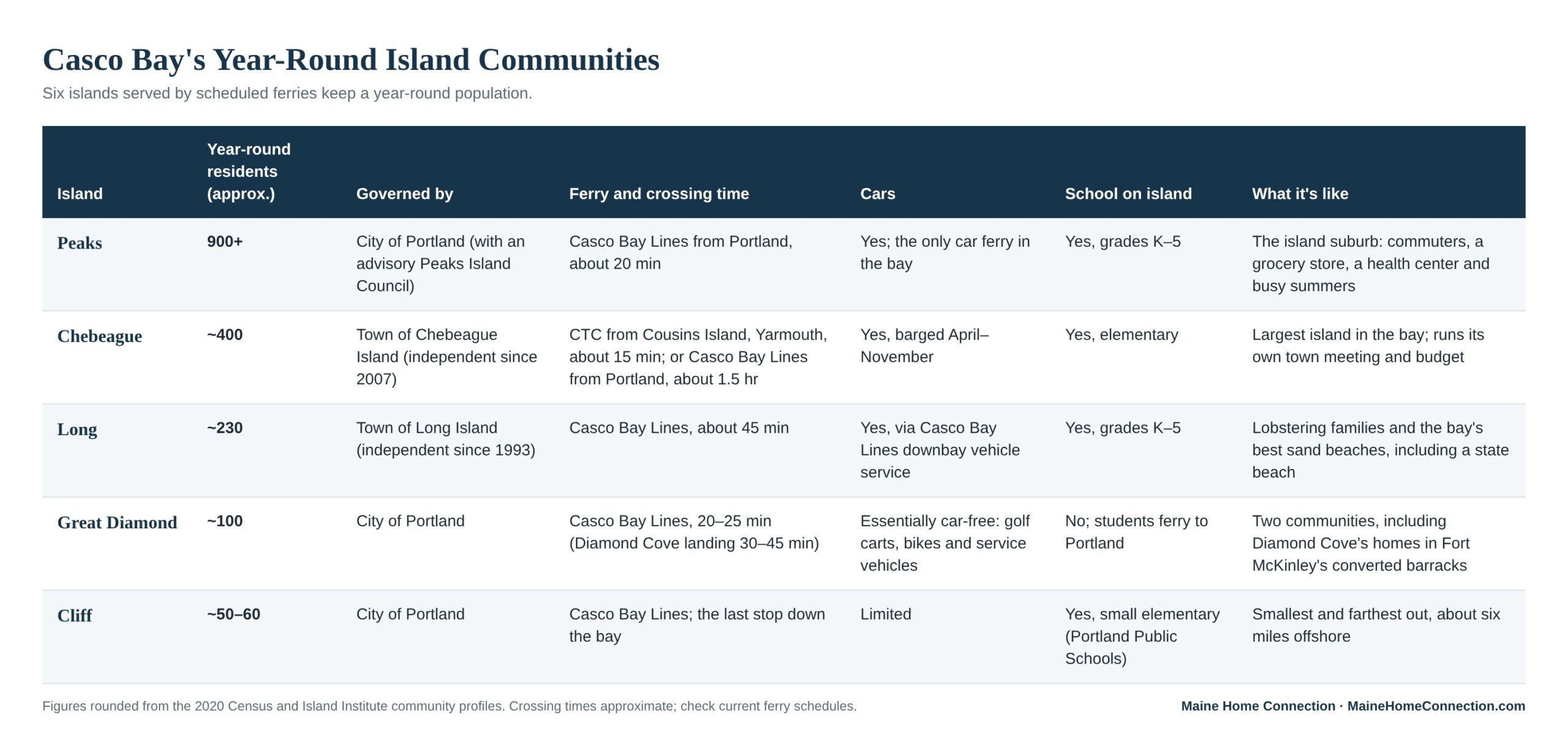
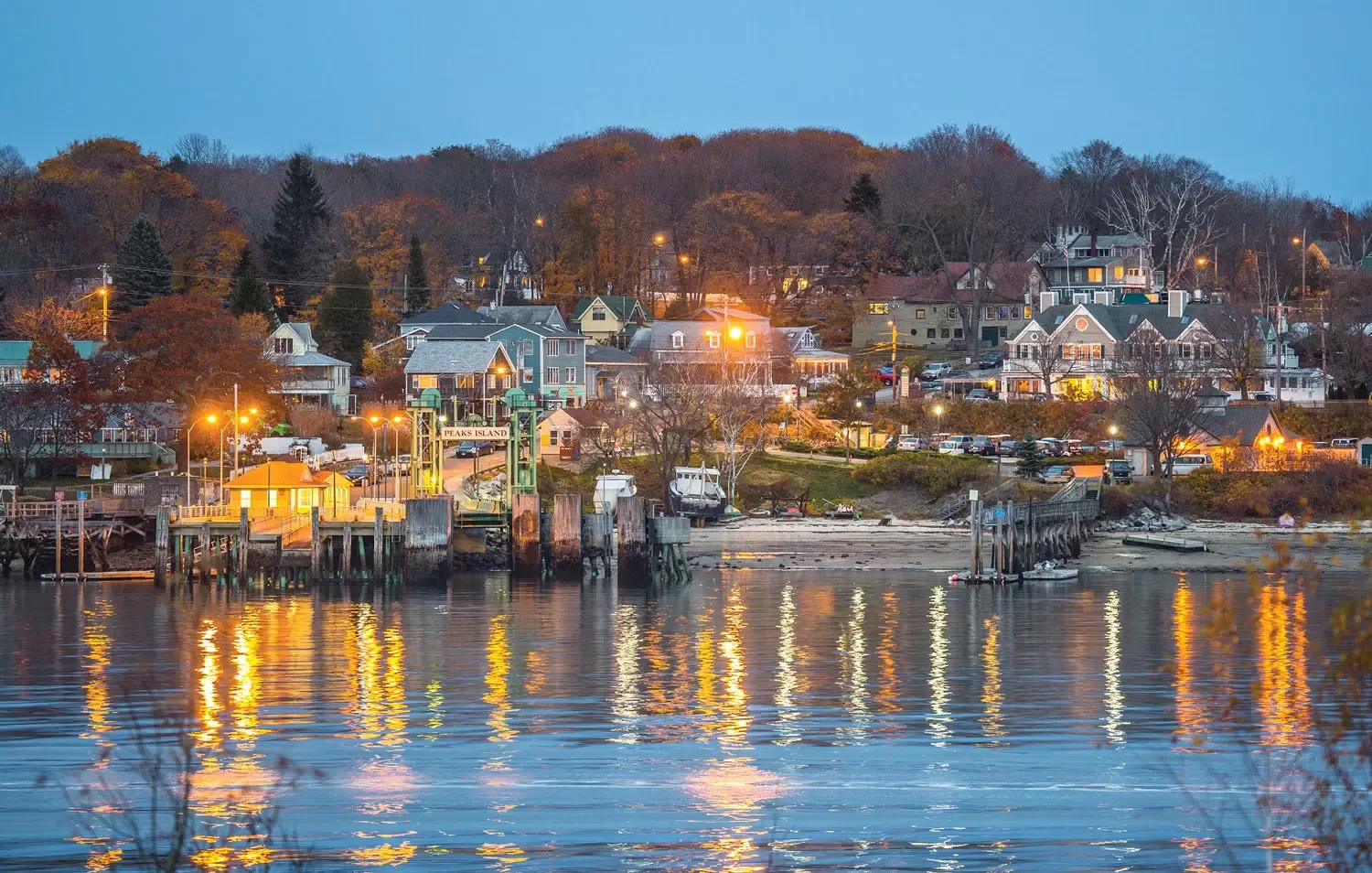
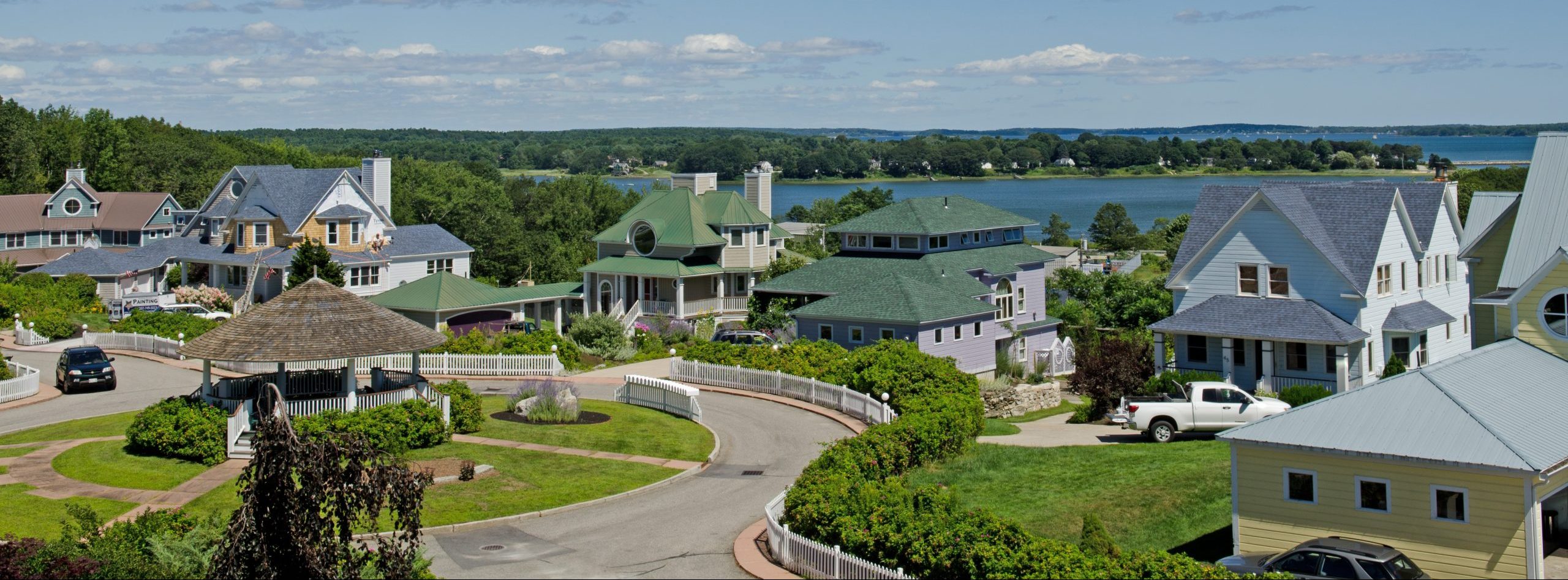
Peaks is the closest thing Casco Bay has to an island suburb. Many residents commute to Portland, and there’s a grocery store, a health center and an elementary school. Long Island and Chebeague each left their mainland municipality and govern themselves by town meeting. That independence still shapes local politics and property taxes. Great Diamond has two distinct communities: an older western side, and Diamond Cove, where former Fort McKinley barracks and officers’ quarters became homes.
Figures are rounded from the 2020 Census and Island Institute community profiles. Crossing times are approximate and vary by route and season; check current schedules with Casco Bay Lines and the Chebeague Transportation Company.
How does the ferry shape daily life?
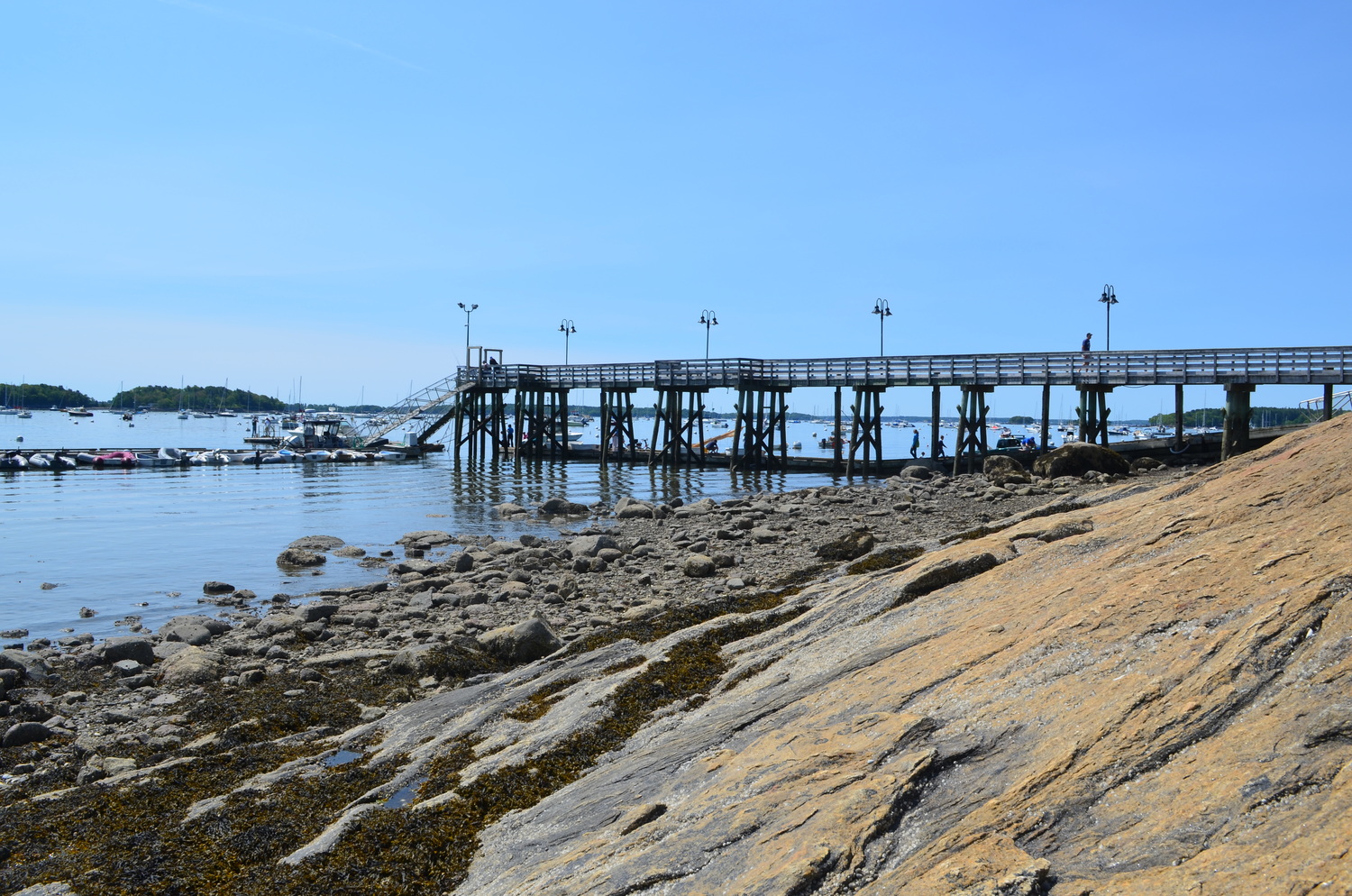
The ferry schedule becomes your calendar. Every appointment, dinner and school pickup on the mainland gets planned around departure times. Casco Bay Lines serves all six islands from Portland. Its winter schedule runs from mid-October to late May, with fewer trips than in summer. The Chebeague Transportation Company runs a 15-minute crossing from Cousins Island in Yarmouth, and many Chebeague residents use it instead of the longer trip from Portland.
The practical effects add up. Missing the last boat means a water taxi or a night on a friend’s couch. Wind and ice can cancel or delay runs. Groceries, furniture and building materials all travel as freight. Mainland parking matters too. Chebeague’s Cousins Island lot is limited to permit-holding year-round residents, with overflow sent to a satellite lot on Route 1. Fares and vehicle rates change as well; Casco Bay Lines restructured its Peaks vehicle rates in early 2026.
Clients who move to the islands learn quickly to keep the ferry schedule close at hand — on the fridge, on the phone, in the car. What surprises many of them is how reliably the boats keep running through the winter months.
What is winter actually like on the islands?
Winter is when an island shows its real size. On Peaks the population drops from several thousand in summer to about 900. On Great Diamond it can fall to a few dozen people. Seasonal restaurants and rentals close, the roads go quiet, and what’s left is a small town where people notice when your lights don’t come on.
That closeness works in both directions. Neighbors check on each other during storms, potlucks and town meetings fill the calendar, and the school and the store become social centers. You also have less privacy and fewer choices. If you like a busy evening out, the city is a boat ride away, and the ride home is on the boat’s schedule, not yours.
Nor’easters are the real test. Power outages can last longer when crews and parts have to come by water, and a cancelled boat can leave you on the wrong side of the bay. Year-round islanders keep generators, a full pantry and a flexible work schedule.
What about schools, healthcare and groceries?
The islands cover the basics, and the mainland covers the rest. Peaks, Long, Chebeague and Cliff all keep small elementary schools, where class sizes are tiny and, as the Island Institute puts it, the island is the classroom. Peaks Island School is a Portland public school serving the earliest grades through 5th grade, in a building dating to 1869. From 6th grade on, island students commute to the mainland by ferry. Peaks and Great Diamond students go to Portland middle and high schools, and Long Island sends its older students to Portland as well.
Healthcare is limited. Peaks has a primary care health center, now run by MaineHealth, open several days a week. Some smaller islands rely on visiting clinicians. Hospitals, specialists and emergency care are on the mainland. That matters more as people age, and Peaks residents have studied building assisted living on the island for exactly that reason.
Peaks has a grocery store, and the smaller islands have general stores or seasonal markets. Most year-round residents still do a big mainland shop and bring it back as freight or in the car.
Do you need a car, and how do you get one out there?
It depends on the island, and plenty of residents end up with two: an island car or golf cart that stays on the island, and a mainland car parked near the terminal. Peaks is the only island with regular car ferry service. Spaces are first come, first served, and the cost of a round trip adds up. Down the bay, vehicles travel on Casco Bay Lines’ downbay service, or by CTC barge to Chebeague from April through November.
Great Diamond goes further: it is essentially car-free. Apart from service and construction vehicles, people get around on foot, by bike or by golf cart. For some buyers that’s the whole appeal. For others, especially anyone who needs to haul tools or groceries, it’s a daily adjustment.
Mainland parking is the hidden line item. Ask about permits, waitlists and winter rules before you buy, not after.
What should buyers know before purchasing an island home?
Island homes take more due diligence than mainland homes, and the questions are different. Some to ask:
- Is it truly year-round? Plenty of island houses began as summer cottages. Check the insulation, heating system, foundation and plumbing for winter use, not just the listing description.
- Water and septic. Many island homes rely on private wells and septic systems. Wells on small islands can face supply and saltwater limits, so testing matters.
- Construction and repair costs. Every contractor, every load of materials and every service call needs a boat. Expect higher costs and longer timelines.
- Insurance and financing. Coastal exposure, distance from fire services and seasonal construction can all affect insurance. Line up quotes early.
- Taxes and services. Portland’s islands pay Portland taxes and get Portland services. Long Island and Chebeague set their own budgets at town meeting.
- Inventory. Year-round-ready homes come up rarely, and the good ones sell to people already watching. You can start watching too: here’s every home currently for sale on the Casco Bay islands. Local knowledge of what’s coming matters more here than almost anywhere.
Maintenance takes more planning on an island, but it’s far from impossible. Many plumbers, electricians, heating companies and contractors serve the islands year-round. The key is knowing who does, and booking ahead rather than waiting for an emergency. Over the years our team has sold many properties on the Casco Bay islands. Whether you’re looking for the right home or the right contractor, help is only a call or text away.
Is year-round island life right for you?
Island life suits people who want a place that runs at its own pace. It also suits people with work they can do from anywhere, or a commute they’re happy to spend on the water. It’s harder for people who need spontaneity, frequent medical care or a short drive to everything. Most buyers who make it work spent time on the island in the off-season first, ideally in February, before they committed.
If you’re weighing a move to Peaks, Chebeague, Long, the Diamonds or Cliff, we’re happy to talk it through. That includes the parts the listing photos leave out. Call Maine Home Connection at 207.517.3100, or visit us at 19 Commercial Street, a short walk from the ferry terminal.
Moving to Maine?
About the Author: Michael